
Why German Silver Gleams: The Science and Beauty of Lange’s Baseplates
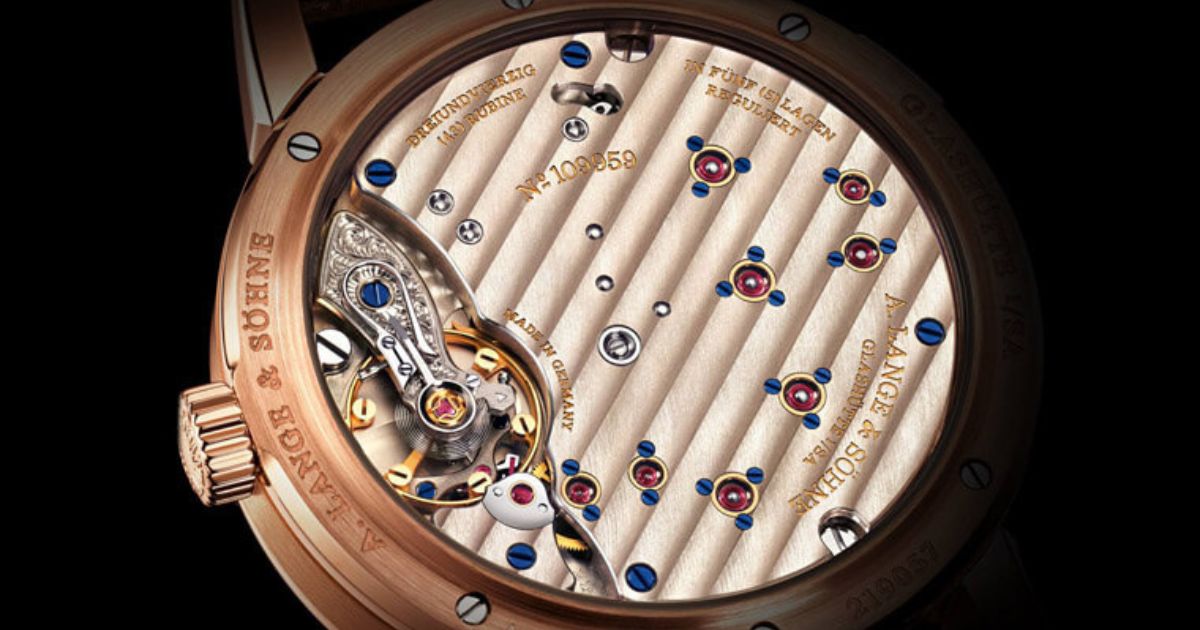
If you’ve ever had the privilege of peering into the heart of an A. Lange & Söhne timepiece, you’ve witnessed something beyond mere mechanics. You’ve seen a miniature cityscape of gold chatons, blued screws, and glittering bridges, all resting on a canvas that seems to glow with a warm, creamy light. This is not your typical rhodium-plated brass or nickel-silver. This is German Silver, and it is one of the most fundamental, and fascinating, pillars upon which Lange’s legendary reputation is built.
For the uninitiated, the term “German Silver” might sound like a marketing gimmick. But for us horological devotees, it represents a deliberate and profound choice—a link to history, a commitment to quality, and a statement of artistic integrity. So, let’s delve into the science and the soul of why this material makes a Lange movement so exceptionally beautiful and technically compelling.
[/vc_column_text][vc_empty_space height=”10px” woodmart_hide_large=”0″ woodmart_hide_medium=”0″ woodmart_hide_small=”0″][vc_custom_heading text=”First, What Exactly Is German Silver?” css=””][vc_empty_space height=”5px” woodmart_hide_large=”0″ woodmart_hide_medium=”0″ woodmart_hide_small=”0″][vc_column_text css=”” woodmart_inline=”no” text_larger=”no”]Let’s clear up a common misconception right away: German Silver contains no actual silver. Its allure isn’t derived from precious metal content, but from its unique metallurgical composition. It is a copper-nickel-zinc alloy, historically known as Maillechort in French or Neusilber (new silver) in German.
Its history in Saxon watchmaking dates back to the 19th century, to the very workshops of Ferdinand Adolph Lange himself. By choosing this robust, handsome alloy for the plates and bridges of his movements, he set a standard for quality that was well above the commonly used brass. When Walter Lange revived the company in 1994, the reinstatement of German Silver was a non-negotiable element—a direct bridge to the brand’s glorious past.
[/vc_column_text][vc_empty_space height=”10px” woodmart_hide_large=”0″ woodmart_hide_medium=”0″ woodmart_hide_small=”0″][vc_custom_heading text=”The Science of the Warm Glow” css=””][vc_empty_space height=”5px” woodmart_hide_large=”0″ woodmart_hide_medium=”0″ woodmart_hide_small=”0″][vc_column_text css=”” woodmart_inline=”no” text_larger=”no”]Think about what this means from a manufacturing perspective. Every single step of the movement’s creation—from milling and turning to the final polishing by a finisher—must be executed with flawless precision. A single slip of a tool, an errant fingerprint handled with corrosive sweat, and a component could be irreparably marred. The tolerance for error is virtually zero.
This forces an unparalleled level of craftsmanship. The famous striped Glashütte ribbing, the perfect bevels and polished edges, the black polishing—all of these finishing techniques are performed directly on this sensitive material. Using German Silver is Lange’s way of shouting to the world that their finishers are among the best on the planet. They don’t need a protective rhodium coat; their skill is the true protection.
[/vc_column_text][vc_empty_space height=”10px” woodmart_hide_large=”0″ woodmart_hide_medium=”0″ woodmart_hide_small=”0″][vc_custom_heading text=”Beauty is More Than Skin Deep: The Technical Rationale” css=””][vc_empty_space height=”5px” woodmart_hide_large=”0″ woodmart_hide_medium=”0″ woodmart_hide_small=”0″][vc_column_text css=”” woodmart_inline=”no” text_larger=”no”]But why go through all this trouble? Is it just for looks? Not entirely. The choice is also grounded in solid engineering principles.
German Silver is significantly harder and more resilient than brass. This rigidity is crucial for the long-term stability of the movement. The baseplate is the foundation upon which everything is built; the gears pivot, the bridges are screwed down, and the entire gear train transmits energy across it. A more rigid baseplate ensures better alignment of these components over decades, contributing to the movement’s legendary precision and longevity.
Furthermore, its hardness means it holds sharp, crisp edges better during the engraving and finishing processes. The sharpness of the text engraved on a Lange balance cock, for example, is a direct beneficiary of the material’s properties.
[/vc_column_text][vc_empty_space height=”10px” woodmart_hide_large=”0″ woodmart_hide_medium=”0″ woodmart_hide_small=”0″][vc_custom_heading text=”The Collector’s Perspective: A Patina of Personality” css=””][vc_empty_space height=”5px” woodmart_hide_large=”0″ woodmart_hide_medium=”0″ woodmart_hide_small=”0″][vc_column_text css=”” woodmart_inline=”no” text_larger=”no”]For the collector, a Lange movement offers a deeply personal connection. When you open the caseback of a watch that has been in your collection for years, you are not just looking at a movement; you are looking at your movement. The subtle patina that has developed is a unique record of your ownership—a visual history that no other watch in the world possesses.
This stands in stark contrast to a rhodium-plated movement, which will look essentially the same in fifty years as it did on day one (barring damage). The Lange movement evolves, making the relationship between the owner and the machine dynamic and deeply personal. It transforms the watch from a perfect, store-bought object into a unique companion.
[/vc_column_text][vc_empty_space height=”5px” woodmart_hide_large=”0″ woodmart_hide_medium=”0″ woodmart_hide_small=”0″][vc_custom_heading text=”Conclusion: The Soul of Saxon Watchmaking” css=””][vc_empty_space height=”5px” woodmart_hide_large=”0″ woodmart_hide_medium=”0″ woodmart_hide_small=”0″][vc_column_text css=”” woodmart_inline=”no” text_larger=”no”]About the author : Junior Darryl

Related Posts
One Comment
Leave A Comment


Kuvipbet, huh? New to me, but the odds look decent. Deposited a bit, gonna try my luck on some football matches. Wish me luck, boys! Check it out yourselves: kuvipbet