
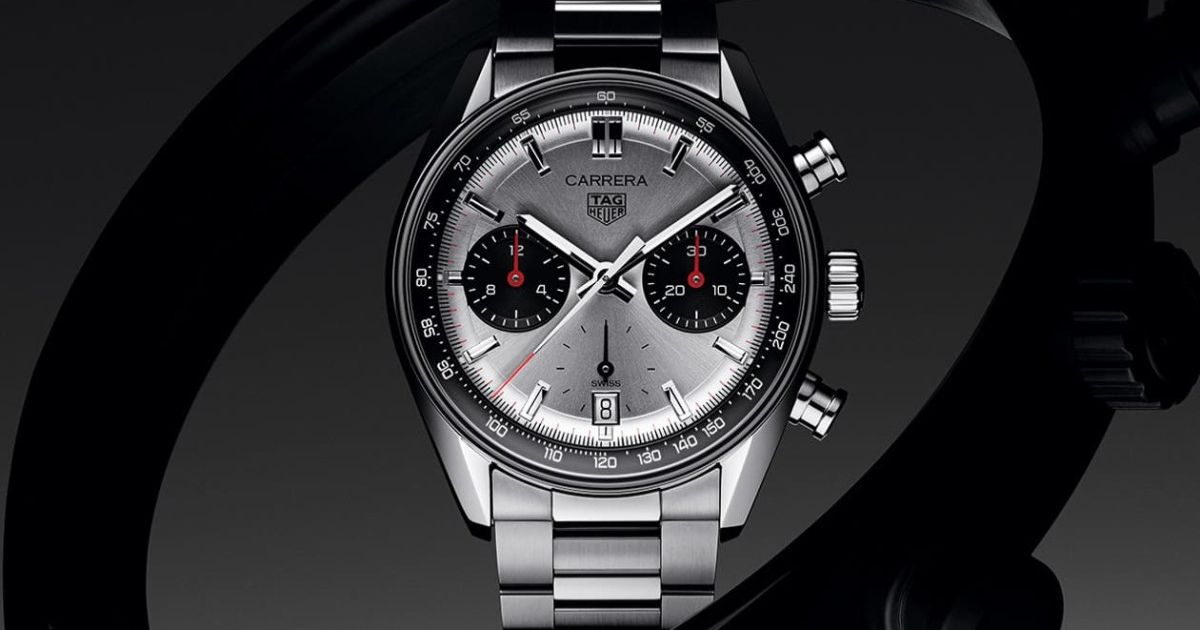
What is a Racing Watch? Everything You Need to Know
If you’ve spent any time in the world of horology, you’ve undoubtedly encountered the term “racing watch.” It’s a style that evokes a potent mix of speed, precision, and a certain rebellious, mechanical cool. But what exactly transforms a timepiece from a mere chronograph into a bona fide racing watch?
Welcome, aficionados. Today, we’re diving deep into the engine bay of these high-performance instruments. We’ll explore their defining features, their rich history rooted in the golden age of motorsport, and what makes them a compelling category for the modern collector. Strap in; we’re about to get up to speed.
[/vc_column_text][vc_empty_space height=”10px” woodmart_hide_large=”0″ woodmart_hide_medium=”0″ woodmart_hide_small=”0″][vc_custom_heading text=”The Heart of the Machine: Defining the Racing Chronograph” css=””][vc_empty_space height=”5px” woodmart_hide_large=”0″ woodmart_hide_medium=”0″ woodmart_hide_small=”0″][vc_column_text css=”” woodmart_inline=”no” text_larger=”no”]At its core, a racing watch is a tool watch born from a specific need: to measure elapsed time. While any chronograph can technically do this, a racing watch is optimized for the unique demands of the track, both for the driver and the pit crew. It’s not just about having stopwatch functions; it’s about how those functions are presented and accessed.
Here are the key elements that separate a racing watch from the pack:
-
The Tachymeter: The Iconic Bezel
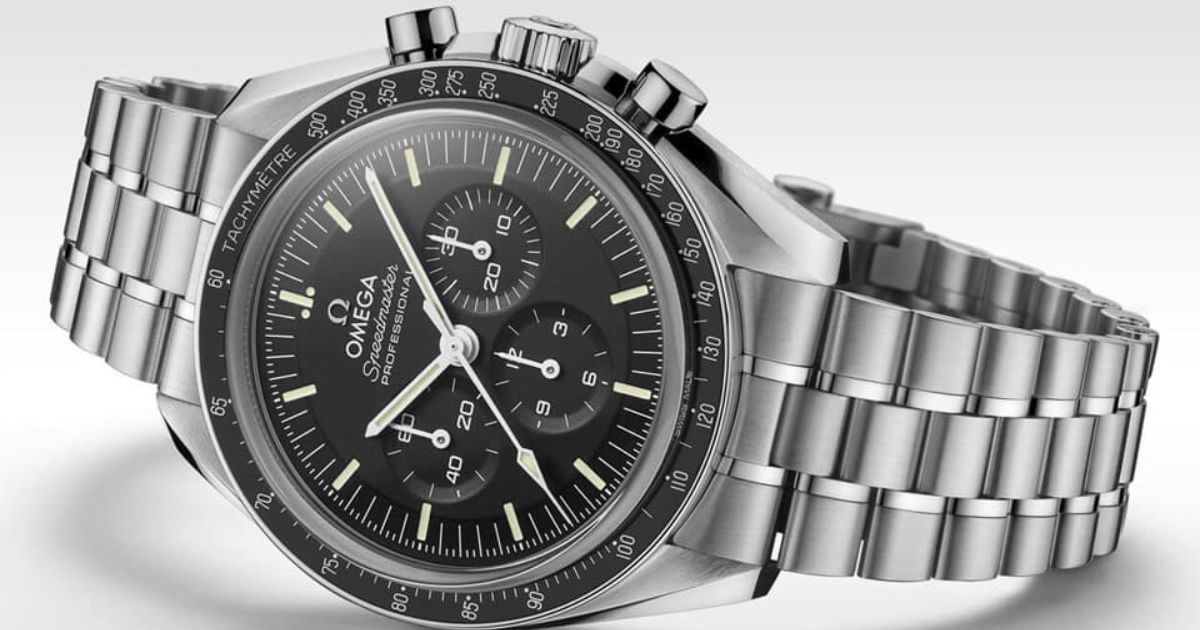
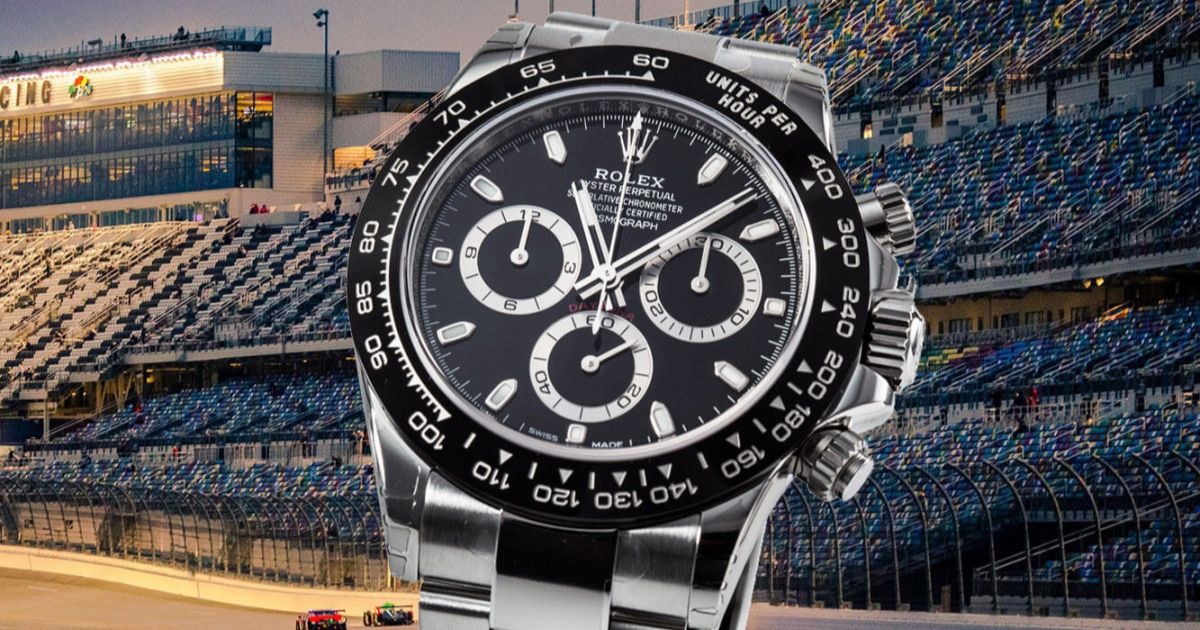
This is the most recognizable feature. The tachymeter scale, typically engraved on the bezel or the outer rim of the dial, allows the user to measure average speed over a fixed distance. The operation is simple: start the chronograph at a mile or kilometer marker, stop it at the next, and the seconds hand points to your average speed (e.g., if it takes 45 seconds to travel one mile, the hand will point to 80 on the tachymeter scale). It’s a direct link to the watch’s motorsport DNA. -
High-Legibility Dial: A Glance is All You Get
In a sport where fractions of a second count, readability is paramount. Racing watches almost always feature a stark contrast between the dial and the hands/indices. Think black dials with white sub-dials, or vice-versa. Lume is abundant. Sub-dials for running seconds, 30-minute, and 12-hour timers are cleanly laid out. The central chronograph seconds hand is often a vibrant, contrasting color (like orange or red) for instant visibility. -
Totalizers and Decimal Scales
While a tachymeter is for speed, some racing watches feature a telemeter to measure distance (like the flash-to-bang of artillery), or more importantly, pulsometer scales for measuring heart rate. However, for professional racing, you might find specialized decimal scales. Instead of the standard 60-second minute, these are calibrated to 100 units, making it easier to calculate fractions of a minute for precise lap timing and engineering data. -
Robust Construction and Ergonomic Pushers
These are instruments meant to be used, not just admired. Cases are often robust, with excellent water resistance being a common, though not always essential, feature. The true ergonomic focus is on the chronograph pushers. They are designed to be operated easily, often with a positive, tactile click, even while wearing driving gloves. Some brands, like TAG Heuer with their famous “Heuer 02” movement, engineer sophisticated modular systems to ensure perfect start/stop/reset action.
To understand the racing watch is to understand its symbiotic relationship with motorsport in the 1960s and 70s.
Brands like Heuer (now TAG Heuer) were at the forefront. The Heuer Carrer, launched in 1963, wasn’t just a watch; it was a co-driver. Its clean, easy-to-read dial and rotating slide-rule bezel made it an instant hit with racing legends like Jo Siffert and later, Steve McQueen. The Monaco, with its revolutionary square, water-resistant case and automatic chronograph movement, became an icon on McQueen’s wrist in the film Le Mans.
Breitling also made significant contributions. The Navitimer, primarily an aviation watch, found a second home on the wrists of racers, but it was models like the Transocean Chronograph that cemented their place with elegant, high-precision timing.
Rolex’s association with Sir Malcolm Campbell and his land-speed records, and later, the Daytona, named after the Florida racing mecca, created an unbreakable bond. The Daytona’s trio of sub-dials and tachymeter bezel became the archetype for the racing chronograph, a status it holds to this day.
Other notable players include Omega, with the Speedmaster’s tachymeter bezel finding purpose on Earth as well as in space, and Tudor, whose Heritage Chrono faithfully reinterprets the “Monte Carlo” dials of the 1970s.
[/vc_column_text][vc_empty_space height=”10px” woodmart_hide_large=”0″ woodmart_hide_medium=”0″ woodmart_hide_small=”0″][vc_custom_heading text=”The Modern Racer: Evolution and Enduring Appeal” css=””][vc_empty_space height=”5px” woodmart_hide_large=”0″ woodmart_hide_medium=”0″ woodmart_hide_small=”0″][vc_column_text css=”” woodmart_inline=”no” text_larger=”no”]So, what is the role of a racing watch in the 21st century? In an era where digital systems handle all professional timing, one might think they’re obsolete. Nothing could be further from the truth.
The modern racing watch has evolved into a symbol of a lifestyle and a connection to a storied heritage. Brands continue to innovate with materials like ceramic for scratch-resistant bezels, carbon composite for lightness, and advanced lubricants for greater accuracy and service intervals.
Furthermore, the design language of the racing watch—bold, legible, and technically focused—has proven to be timeless. It speaks to an appreciation for mechanical excellence, a love of history, and a touch of sporty elegance. Whether you’re timing a parking spot, a presentation, or simply appreciating the sweep of a chronograph hand, you are participating in a legacy of precision.
[/vc_column_text][vc_empty_space height=”10px” woodmart_hide_large=”0″ woodmart_hide_medium=”0″ woodmart_hide_small=”0″][vc_custom_heading text=”Shifting Gears: Is a Racing Watch for You?” css=””][vc_empty_space height=”5px” woodmart_hide_large=”0″ woodmart_hide_medium=”0″ woodmart_hide_small=”0″][vc_column_text css=”” woodmart_inline=”no” text_larger=”no”]Choosing a timepiece is a deeply personal journey. A racing watch might be for you if:
-
You value legibility and function-first design.
-
You have a passion for motorsport history or mechanical engineering.
-
You appreciate a watch with a robust, tool-watch personality that still possesses undeniable style.
-
You enjoy the interactive nature of a chronograph complication.
In the end, a racing watch is more than just a tool for measuring speed. It is a wearable piece of history, a tribute to human ingenuity and the relentless pursuit of performance. It’s a reminder that in a world of digital abstraction, there is profound satisfaction in a perfectly timed mechanical event, triggered by your own command.
What are your favorite racing chronographs? Share your thoughts and the stories behind your own speed-timing machines in the comments below. Until next time, keep your timekeeping precise and your passions driven.
[/vc_column_text][/vc_column][/vc_row]About the author : Junior Darryl

Related Posts
One Comment
Leave A Comment

Yo, just signed up with Lucky8app and so far, so good! The interface is slick and I’m digging the variety of games. Haven’t won big yet, but I’m feeling lucky! Check ’em out: lucky8app