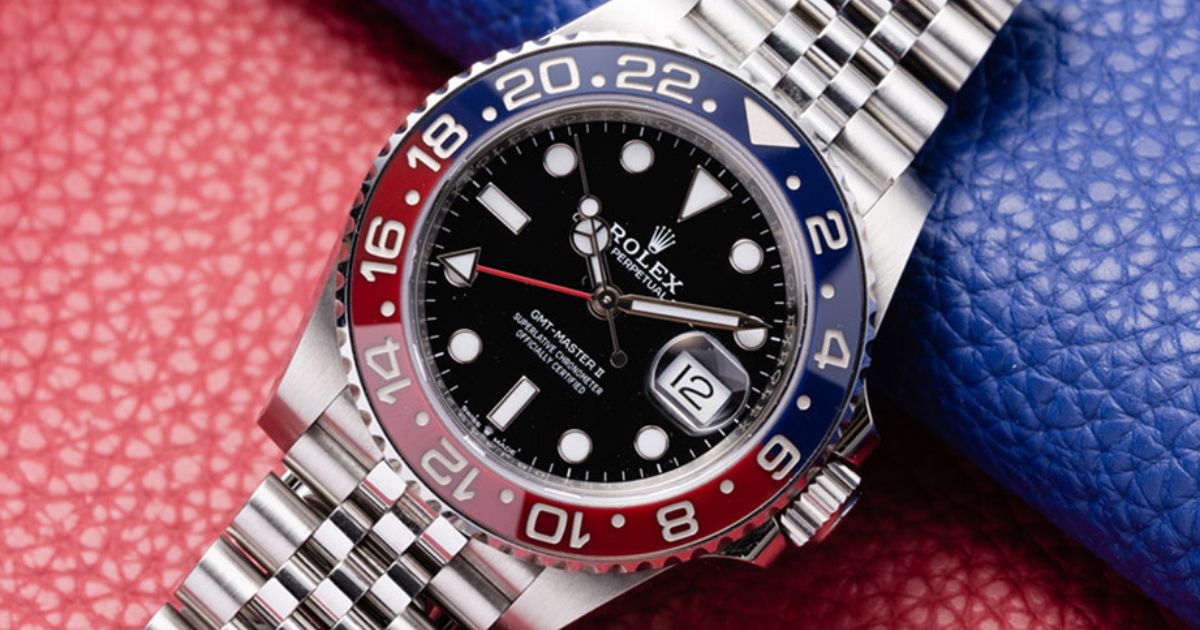
What is a GMT Watch? A Beginner’s Guide
If you’re diving into the world of luxury watches, you’ve undoubtedly come across the term “GMT.” It’s a staple in many collections, from the seasoned globetrotter to the desk diver who dreams of far-off lands. But what exactly is a GMT watch, and what makes it so compelling beyond its often-striking aesthetics?
In this beginner’s guide, we’ll unravel the mystery of the GMT complication. We’ll explore its history, break down how it works, and introduce you to the different types you’re likely to encounter on your horological journey.
The “Why”: A Brief History Rooted in Travel
To truly appreciate the GMT, we must travel back to the golden age of international air travel in the 1950s. As commercial airlines began connecting continents with unprecedented speed, pilots and frequent flyers faced a new challenge: quickly tracking multiple time zones.
The term “GMT” stands for Greenwich Mean Time, which is the solar time at the Royal Observatory in Greenwich, London. It served as the world’s prime meridian (0° longitude) and the basis for the global time zone system. While Coordinated Universal Time (UTC) has since become the more precise standard, the name “GMT” stuck in the world of watchmaking.
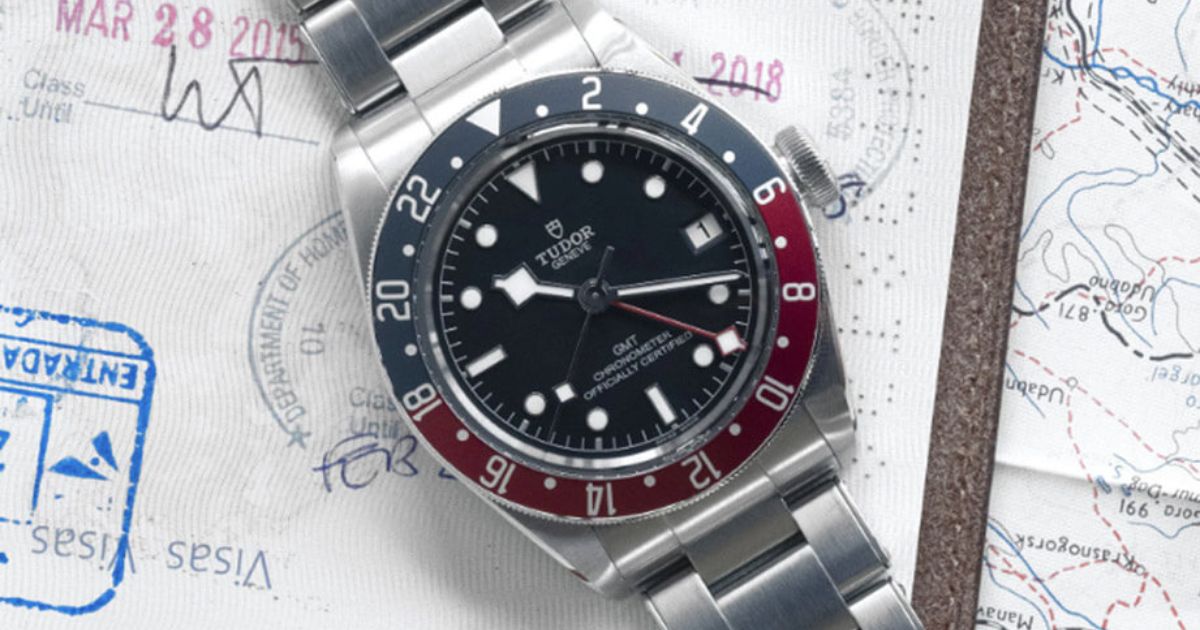
Recognizing this need, Rolex, in collaboration with Pan American Airways, developed a solution. In 1954, they introduced the Rolex GMT-Master, ref. 6542. Its signature feature was a distinct 24-hour hand and a rotating bezel with a 24-hour scale, famously in a blue and red “Pepsi” scheme. This allowed pilots to read a second time zone—specifically, GMT itself—at a glance. This was not just a new watch; it was a tool for a new era of global connectivity.
The “How”: Deconstructing the GMT Complication
At its core, a GMT watch provides the time in at least two different time zones simultaneously. Let’s break down the typical components:
- The Standard Time Hands: Just like any other watch, it has the central hour, minute, and seconds hands showing your local time.
- The GMT Hand: This is the star of the show. It’s an additional, distinct central hand (often a different shape or colour, like an arrow) that completes one full rotation every 24 hours, not 12.
- The 24-Hour Scale: To read the GMT hand, you need a 24-hour scale. This can be located in one of two places:
- On a Rotating Bezel: This is the classic and most functional design. The bezel can be turned to set the second time zone.
- On the Rehaut (or Chapter Ring): This is a fixed 24-hour scale printed on the dial itself or on the inner ring of the watch.
So, how do you use it?
The most common method is to set the GMT hand to display your “home” time or a reference time like UTC. The 24-hour format prevents any day/night confusion. Once set, you can easily track that second time zone.
Now, if you’re traveling, the real magic happens with the local hour hand. This is where we encounter the two main types of GMT movements.
The Two Flavours of GMT: Traveller vs. Office
Not all GMT functions are created equal. Understanding this distinction is key to appreciating the engineering behind them.
1. The “Traveller” GMT (or “True” GMT)
This is the purist’s choice and follows the original intent of the complication. It’s often found in higher-end luxury watches.
- How it works: The GMT hand is tied to the main timekeeping mechanism and cannot be adjusted independently in its own single-hour steps. Instead, the local hour hand is “jumpable”—it can be adjusted forward or backward in one-hour increments without stopping the seconds or minute hands, and without disturbing the GMT hand’s tracking of the home time.
- The Traveller’s Workflow: You land in a new time zone. You pull the crown to the first position and click it forward or backward. The local hour hand jumps, the date may change accordingly, but the GMT hand continues to point faithfully to your home time. The rotating bezel can then be used to track a third time zone if desired.
- Why it’s brilliant: It’s designed for the person on the move. It’s quick, intuitive, and keeps the watch running continuously.
2. The “Office” GMT (or “Caller” GMT)
This is a more common and often more affordable architecture, though it’s found in many fantastic watches.
- How it works: In this setup, the standard hour, minute, and seconds hands are linked as usual. The GMT hand is independently adjustable, usually by pulling the crown to a separate, specific position and turning it.
- The “Caller’s” Workflow: You set the main hands to your local time. You then independently set the GMT hand to show the time in another zone you wish to track. If you travel to a new time zone, you must stop the watch and reset all the hands to the new local time, and then reset the GMT hand to your home reference.
- Why it exists: It’s mechanically simpler to produce. It’s perfect for someone who needs to track another time zone (perhaps for calling a colleague or family member abroad) but isn’t constantly crossing time zones themselves. Hence the nickname “Caller” GMT.
Iconic GMT Watches to Know
While we won’t delve into every model, no guide would be complete without mentioning a few legends that have defined this category:
- Rolex GMT-Master II: The direct descendant of the original. Famous for its “Pepsi,” “Batman,” and “Root Beer” bezels, it features a robust Traveller GMT movement and is one of the most recognizable watches in the world.
- Patek Philippe Aquanaut Travel Time & Calatrava Pilot Travel Time: Patek’s elegant take on the Traveller GMT, often using pushers instead of a rotating crown to adjust the local hour hand.
- Grand Seiko “Hi-Beat” GMT: A masterpiece of Japanese engineering, offering incredible Zaratsu polishing, a stunning dial, and a high-beat movement, often in the Office GMT style.
- Omega Seamaster Aqua Terra WorldTimer: While a worldtimer is a different complication (showing all time zones at once), Omega’s execution is a spectacular way to track the globe, using a central hand linked to a 24-hour ring and a city disc.
Is a GMT Watch for You?
The GMT complication is more than just a tool; it’s a connection to a story of human innovation and exploration. Even if you don’t travel frequently, owning a GMT watch is a nod to that spirit of adventure. It’s for the individual who has business in multiple cities, family across the ocean, or simply a mind that is always thinking beyond the horizon on their wrist.
It’s a reminder that in our interconnected world, there’s always another story happening in another time zone. And on your wrist, you have a window to it.
Welcome to the world of GMT. Your collection will be all the richer for it.
About the author : Junior Darryl

Related Posts