
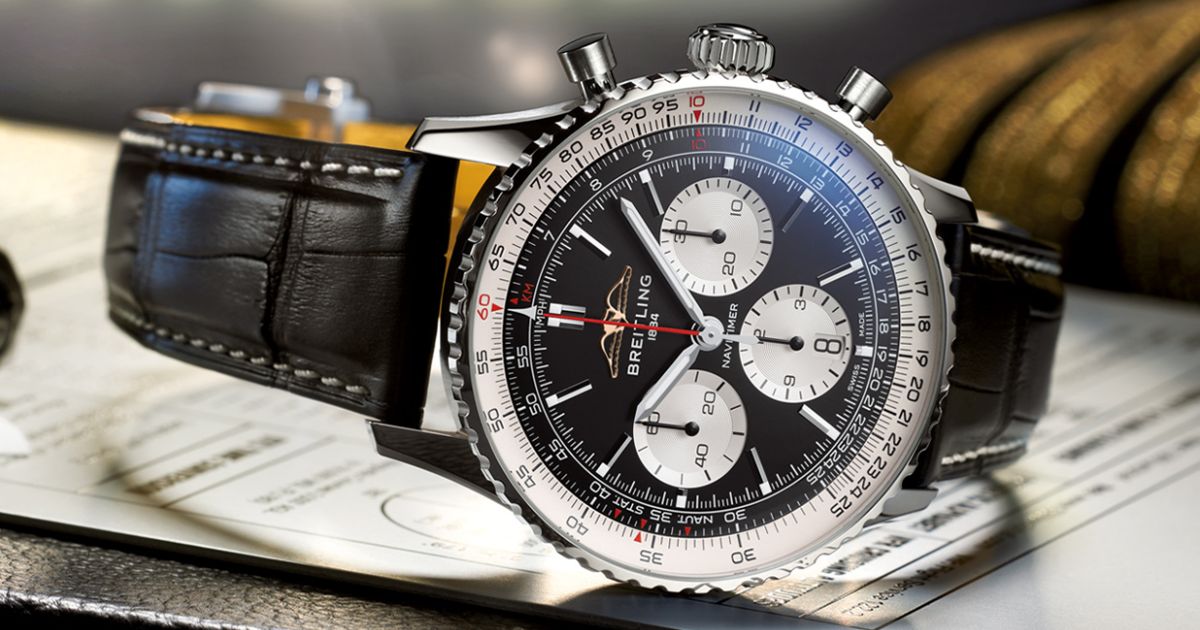
What is a Chronograph? A Beginner’s Guide
Welcome, watch aficionados and newcomers alike! If you’ve ever been captivated by a watch with multiple dials and pushers on the side, wondering what all that complexity is for, you’ve come to the right place. Today, we’re diving deep into one of the most popular and functional complications in horology: the chronograph.
In simple terms, a chronograph is a watch with a built-in stopwatch function. But to call it just a “stopwatch” is to do it a disservice. It’s a masterpiece of micro-engineering, a symphony of gears and levers that brings interactive timing to your wrist. The word itself comes from the Greek “chronos” (time) and “graph” (to write), harkening back to early time-measuring devices that literally recorded their measurements.
So, let’s unravel the mystery of this iconic complication.
[/vc_column_text][vc_empty_space height=”10px” woodmart_hide_large=”0″ woodmart_hide_medium=”0″ woodmart_hide_small=”0″][vc_custom_heading text=”The Anatomy of a Chronograph” css=””][vc_empty_space height=”5px” woodmart_hide_large=”0″ woodmart_hide_medium=”0″ woodmart_hide_small=”0″][vc_column_text css=”” woodmart_inline=”no” text_larger=”no”]Before we get it ticking, let’s learn the parts. A typical chronograph watch has a few key components you need to recognize:
-
The Main Time Display: This is your standard watch face, showing hours, minutes, and often seconds.
-
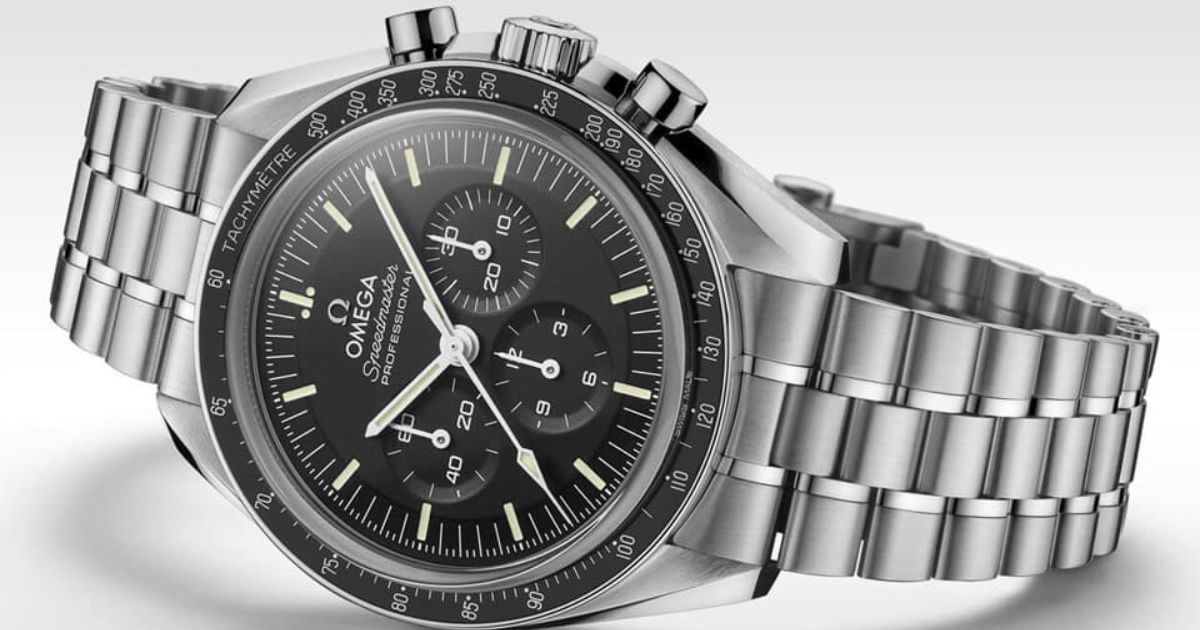
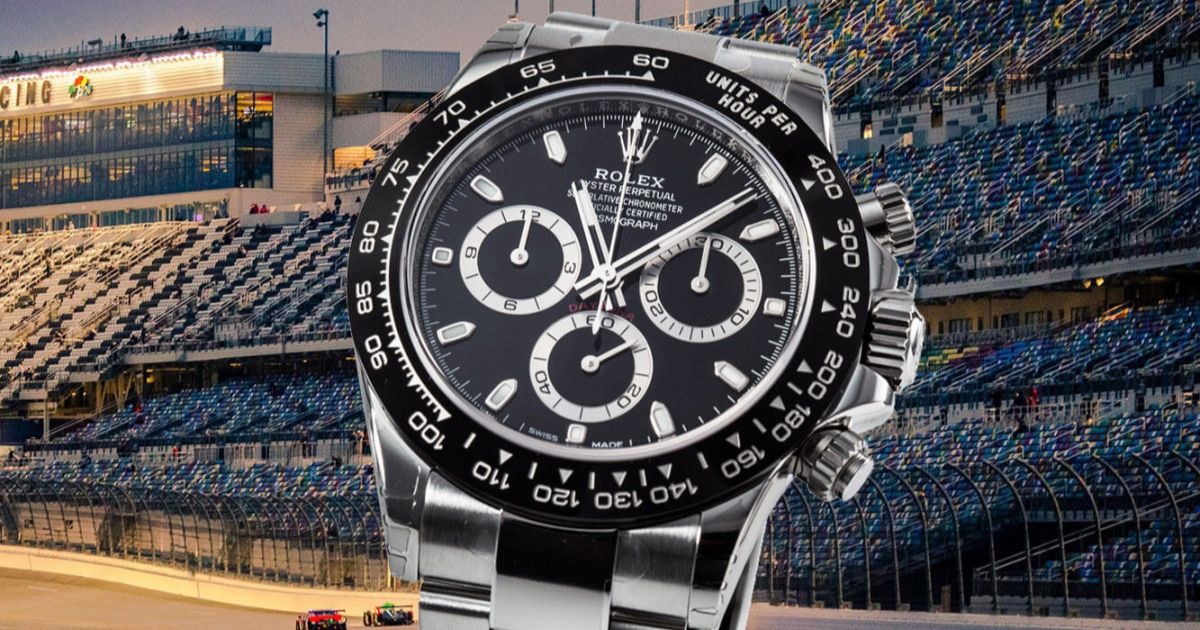
The Sub-Dials (or Totalizers): These are the smaller dials on the main face. They are the heart of the chronograph’s recording function. A typical configuration includes:
-
30-minute or 60-minute counter: Tracks the elapsed minutes of your timing session.
-
12-hour counter: For longer timing events.
-
Running Seconds: This is often confused, but on a chronograph, the small seconds hand is usually tied to the watch’s main timekeeping. The chronograph has its own separate seconds hand.
-
-
The Pushers: These are the buttons on the side of the case, usually at 2 o’clock and 4 o’clock.
-
Top Pusher (2 o’clock): This is your start/stop button. Press it once to start the chronograph, and press it again to stop it.
-
Bottom Pusher (4 o’clock): This resets the chronograph hands back to zero. It only works when the chronograph is stopped.
-
-
The Central Chronograph Hand: This is the large seconds hand in the center of the dial. When you start the chronograph, this is the hand that sweeps around the dial, measuring elapsed seconds. Do not confuse this with the main time-telling seconds hand if your watch has one.
Using a chronograph is intuitive, but there’s a crucial rule to remember for mechanical watches: Never press the reset pusher while the chronograph is running. This can jar the delicate movement and cause damage.
-
Starting: Press the top pusher. You will see the central chronograph seconds hand begin its sweep.
-
Stopping: Press the top pusher again. The central hand will stop, indicating the end of your timed event. The sub-dials will show the elapsed minutes and hours.
-
Resetting: Once the chronograph is stopped, press the bottom pusher. All the chronograph hands (central seconds and those on the sub-dials) will snap back to their zero positions, ready for the next use.
Some advanced chronographs feature a “flyback” function, which allows for instantaneous resetting and restarting with a single push of the bottom button—a feature developed for pilots and navigators.
[/vc_column_text][vc_empty_space height=”10px” woodmart_hide_large=”0″ woodmart_hide_medium=”0″ woodmart_hide_small=”0″][vc_custom_heading text=”A Glimpse into the Mechanism: How Does it Work?” css=””][vc_empty_space height=”5px” woodmart_hide_large=”0″ woodmart_hide_medium=”0″ woodmart_hide_small=”0″][vc_column_text css=”” woodmart_inline=”no” text_larger=”no”]This is where the true magic lies. When you press the start pusher, a series of finely engineered events occurs inside the watch:
-
A lever, called a column wheel or a cam, engages.
-
This lever disengages a brake on the chronograph wheel and simultaneously brings a coupling clutch into contact.
-
This clutch connects the power from the main going train of the watch (which keeps the time) to the separate chronograph wheel train, setting the central hand in motion.
When you press stop, the process reverses. The clutch disengages, and the brake stops the chronograph wheel instantly. The reset function uses a series of heart-shaped cams that, when activated, push the hands back to their starting point with perfect precision.
The choice between a column wheel (often considered the more refined, traditional approach) and a cam system (robust and often more serviceable) is a key differentiator in high-end watchmaking and a topic of endless debate among collectors.
[/vc_column_text][vc_empty_space height=”10px” woodmart_hide_large=”0″ woodmart_hide_medium=”0″ woodmart_hide_small=”0″][vc_custom_heading text=”More Than Just a Stopwatch: Types of Chronographs” css=””][vc_empty_space height=”5px” woodmart_hide_large=”0″ woodmart_hide_medium=”0″ woodmart_hide_small=”0″][vc_column_text css=”” woodmart_inline=”no” text_larger=”no”]The basic chronograph is just the beginning. Watchmakers have created several specialized types:
-
Tachymeter: The most common scale found on a chronograph bezel. It measures speed based on time over a fixed distance. Start the chronograph at a mile marker, stop it at the next, and the central hand will point to your average speed in units per hour.
-
Telemeter: Measures distance based on the speed of sound. Useful for figuring out how far away a storm is by timing the gap between lightning and thunder.
-
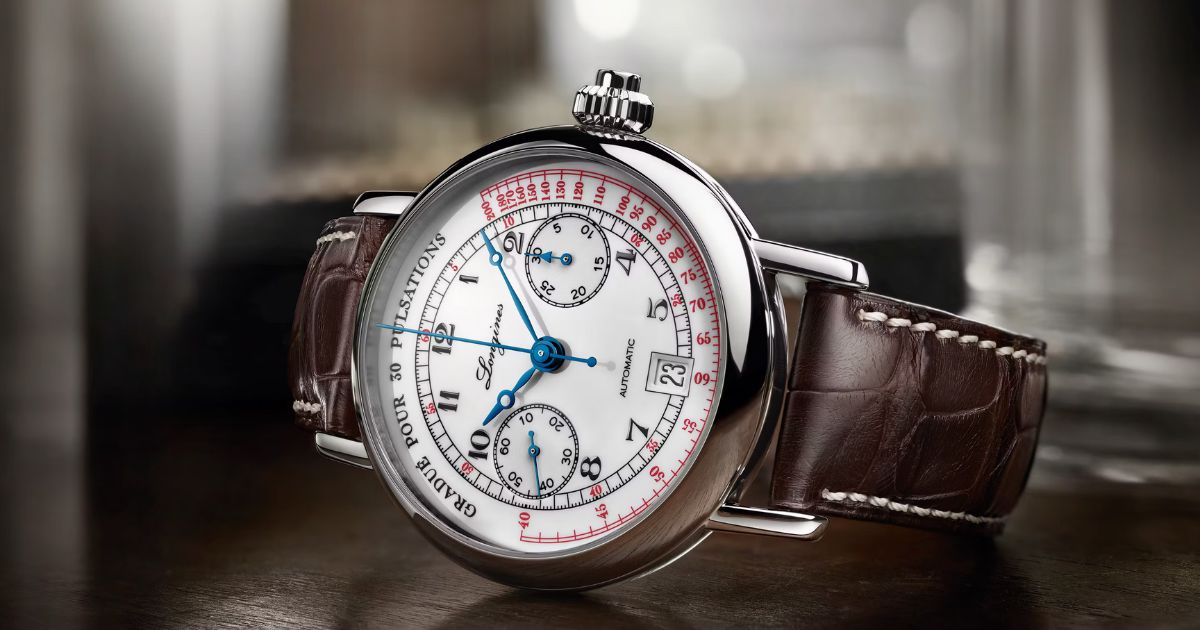
Pulsometer: Allows a doctor to measure a patient’s pulse rate quickly.
-
Rattrapante (or Split-Seconds Chronograph): The pinnacle of chronograph complexity. It has two central seconds hands. You can stop one hand to record an intermediate time (e.g., a lap time) while the other continues to run, “catching up” to the first when you activate the second pusher.
The chronograph is more than a tool; it’s a symbol of human ingenuity. It represents our desire not just to observe time, but to command it, to measure intervals, and to interact with the machinery on our wrists. In an age where digital timers are ubiquitous, the mechanical choreography of a chronograph movement remains a breathtaking spectacle of analog brilliance.
For the beginner, it offers a gateway into the fascinating world of complications. For the seasoned collector, it represents an endless field of technical and aesthetic exploration.
So the next time you see a chronograph, you’ll see more than just a stopwatch. You’ll see a piece of history, a feat of engineering, and a timeless companion for measuring life’s most precious moments.
What’s your favorite chronograph? Let me know in the comments below!
[/vc_column_text][/vc_column][/vc_row]About the author : Junior Darryl

Related Posts
One Comment
Leave A Comment

88phat seems pretty new, but I’m willing to give it a try. The website looks good, and they have a decent range of games. Fingers crossed for some beginner’s luck! Find out more here: 88phat