The Legacy of Abraham-Louis Breguet: The Man Who Invented Time
If you were to ask a room of watch collectors to name the most important figure in the history of horology, one name would invariably rise above the rest: Abraham-Louis Breguet. To call him a mere watchmaker feels like calling da Vinci a simple painter. Breguet was an inventor, a scientist, an artist, and a visionary whose mind seemed to operate on a different plane of reality. His work, born in the late 18th and early 19th centuries, didn’t just tell time; it defined what a mechanical timepiece could be. He was, in many profound ways, the man who invented modern timekeeping.
His story begins in Neuchâtel, Switzerland, but his destiny was forged in Paris. Apprenticed to a master watchmaker and later marrying into a prosperous family, Breguet established his own workshop on the Quai de l’Horloge. This address would become a pilgrimage site for European royalty, intellectuals, and military leaders. But it wasn’t just his clientele that was elite; it was his mind. Breguet looked at the watchmaking of his era—often bulky, unreliable, and susceptible to the elements—and saw a canvas for radical improvement.
The Foundations of Modern Horology
Breguet’s genius lay in his ability to identify fundamental problems and engineer elegant, lasting solutions. Before his interventions, watchmaking was plagued by friction, poor timekeeping, and a lack of shock resistance. Breguet systematically tackled each issue.
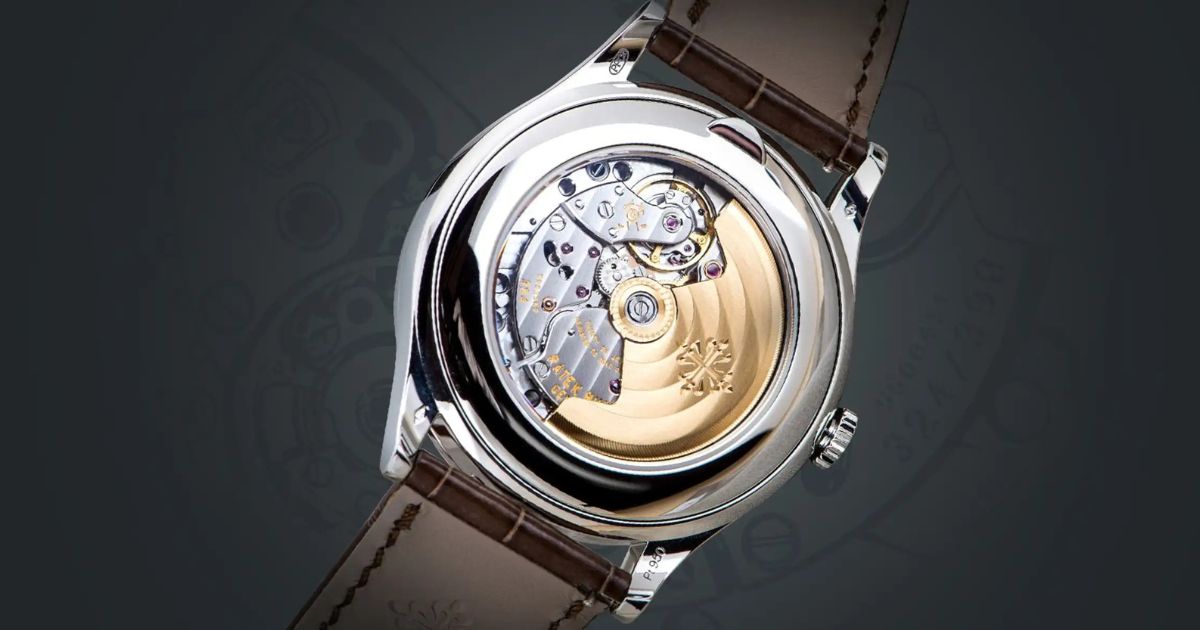
His first world-changing invention was the self-winding perpetual rotor, which he developed around 1780 for a pair of watches sold to the Duchesse de Polignac. While not the first attempt at automatic winding, Breguet’s system, with its efficient oscillating weight, was the first truly practical and reliable one. He had, in essence, created the first automatic watch, freeing the wearer from the daily ritual of winding and paving the way for every modern self-winding movement.
Then came the “Breguet Overcoil.” The heart of a mechanical watch is its balance spring, and in Breguet’s day, the flat hairspring was prone to imbalances as it expanded and contracted. Breguet’s solution was as beautiful as it was brilliant: he raised the final coil of the spring and bent it inward, creating a more concentric development and contraction. This single innovation drastically improved isochronism—the watch’s ability to keep a consistent beat regardless of its position—and remains a hallmark of high-end watchmaking to this day.
No discussion of his technical prowess is complete without the tourbillon. Patented in 1801, the tourbillon is perhaps the most revered and romanticized complication. Breguet understood that in a pocket watch (typically held vertically in a waistcoat pocket), gravity would adversely affect the regularity of the balance wheel and spring. His solution was to house the entire escapement and balance wheel in a rotating cage, continuously revolving, usually once a minute. This ingenious mechanism averaged out positional errors, resulting in superior accuracy. Today, the tourbillon is the ultimate demonstration of a watchmaker’s skill, a mesmerizing, poetic complication born from pure, logical genius.
An Artist’s Touch: The Breguet Style
Yet, Breguet was not solely an engineer; he was an artist with an impeccable eye for legibility and elegance. His designs were so distinctive that they have collectively become known as the “Breguet Style.”
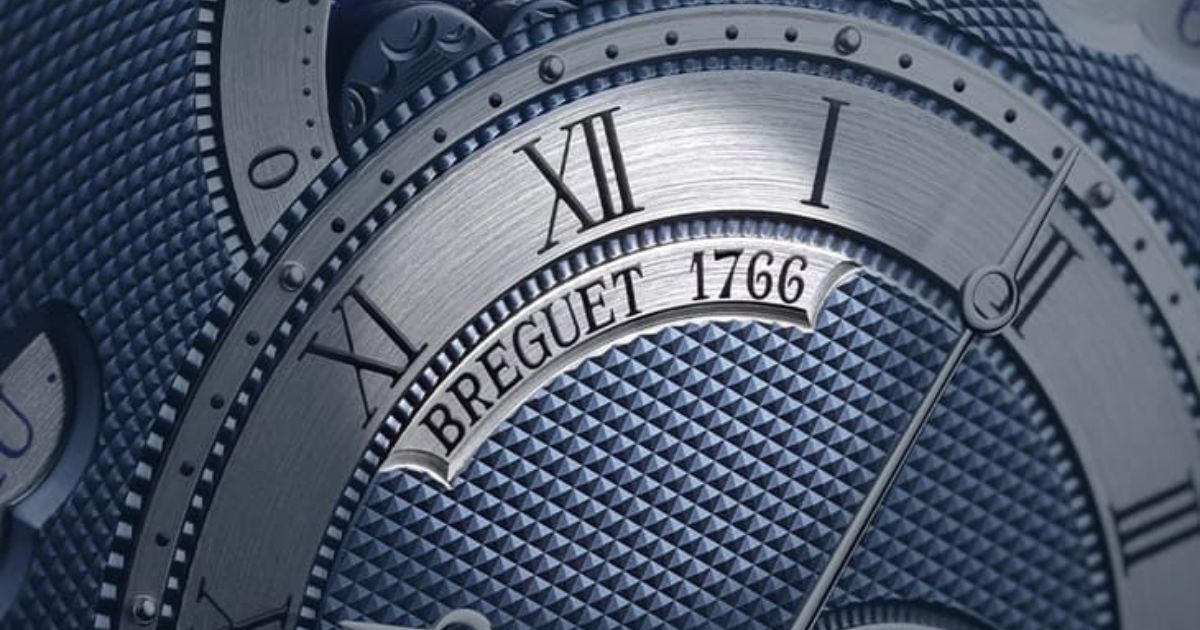
- Breguet Hands: Those elegant, hollow, moon-tipped hands you see on countless classic watches? They are Breguet hands. He designed them for superior clarity and a touch of soft elegance, a stark contrast to the heavier, more ornate hands of the period.
- Breguet Numerals: The clean, legible Arabic numerals, often found on enamel dials, are another of his signatures.
- Guilloché Dials: Breguet was a master of employing engine-turning, or guilloché. He used these intricate, hand-turned patterns on dials not just for their breathtaking beauty, but for their practical purpose: the textured surfaces reduced glare and made the hands and numerals easier to read.
- Pare-Chute Anti-Shock Device: Aesthetically hidden but mechanically vital, this was one of the first effective shock-protection systems for the balance pivots, showcasing his dedication to durability.
A Legacy Etched in History
The impact of Breguet’s work is measured not just in mechanisms, but in its influence on history itself. His clients included kings and queens like Louis XVI and Marie-Antoinette (for whom the legendary, incredibly complex “Marie-Antoinette” watch was commissioned), emperors like Napoleon Bonaparte, and luminaries like Sir Winston Churchill. To own a Breguet was a statement of intellect, power, and refined taste.
The company’s survival and continued reverence are a testament to the strength of his legacy. After passing through his family, the house was revitalized in the late 20th century, not by resting on its laurels, but by faithfully upholding its founder’s spirit of innovation. The modern Classique, Marine, and Tradition lines are direct dialogues with Breguet’s original designs, often incorporating his inventions and aesthetic codes with new, in-house calibers and modern materials.
The Enduring Lesson
For the modern watch enthusiast, the legacy of Abraham-Louis Breguet is a masterclass in what defines true horology. It is the relentless pursuit of precision. It is the marriage of technical innovation with understated beauty. It is the understanding that a watch is more than an instrument; it is a piece of wearable history, a testament to human ingenuity.
When you look at a watch with Breguet hands, or hear the whisper of a modern automatic movement, or gaze through a sapphire caseback at the hypnotic dance of a tourbillon, you are witnessing the living legacy of a singular genius. He didn’t just build watches; he built the very foundation upon which modern watchmaking stands. And in doing so, Abraham-Louis Breguet didn’t just measure time—he truly invented it.
About the author : Junior Darryl

Related Posts