The Cosmograph Daytona: A Legend on the Wrist and the Track
Few timepieces in horological history evoke as much passion, prestige, and pure racing pedigree as the Rolex Cosmograph Daytona. More than just a watch, the Daytona is a symbol—a confluence of precision engineering, sporting heritage, and timeless design that has cemented its status as a legend both on the wrist and on the racetrack. For collectors and enthusiasts, its story is a compelling chapter in the art of watchmaking.
Born for Speed: The Genesis of an Icon
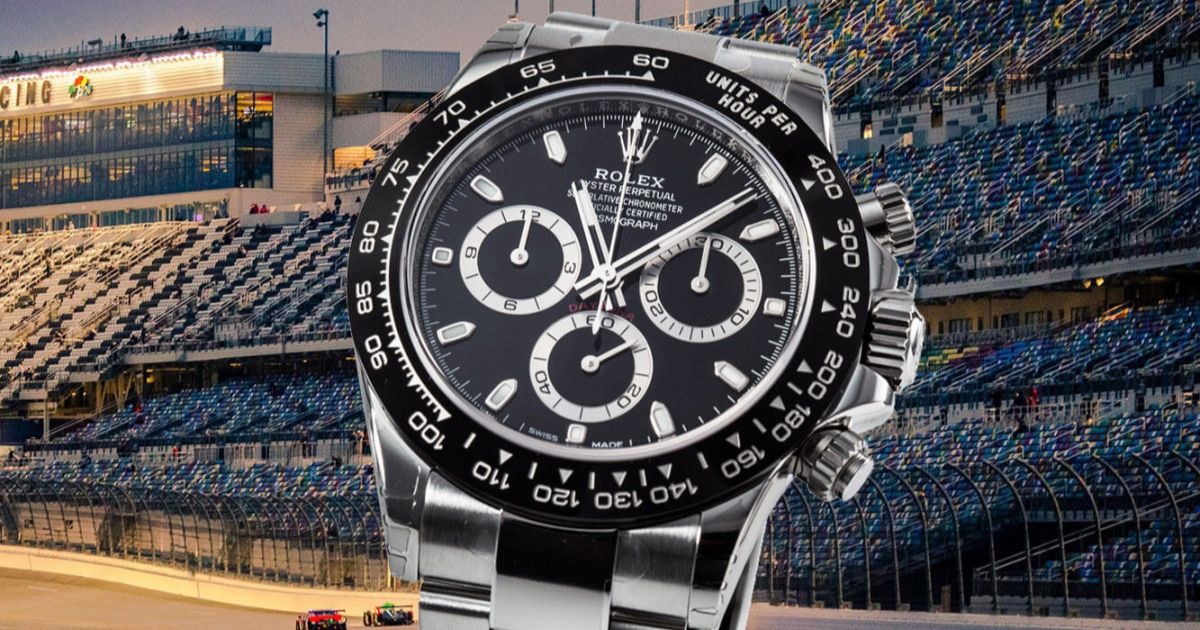
Introduced in 1963, the Cosmograph was Rolex’s definitive answer to the needs of professional racing drivers. While chronograph wristwatches already existed, Rolex aimed to create the ultimate tool for measuring speed. The name “Daytona” was added later, paying homage to the high-speed temple of motorsport: Daytona Beach, Florida. This connection wasn’t merely marketing; it was a seal of purpose. The Daytona International Speedway became the watch’s spiritual home, solidifying its identity as the chronograph for those who live life in the fast lane.
The early references, like the ref. 6239, established the iconic layout we know today: three contrasting sub-dials for elapsed hours, minutes, and continuous seconds, and a tachymeter scale engraved on the bezel to measure average speed over a fixed distance. This bezel, initially made of metal (earning early models the “Paul Newman” nickname due to the actor’s famed dial variant), was later updated to a highly scratch-resistant black Cerachrom ceramic in modern iterations—a testament to Rolex’s relentless innovation.
The Heart of the Matter: Evolution of the Movement
The Daytona’s journey is also a tale of mechanical evolution. The first models used manually-wound Valjoux movements. While robust and beloved, the quest for perfection led Rolex to a horological milestone. In 1988, the ref. 16520 introduced a self-winding chronograph movement, a significant step towards convenience and technical prowess.
However, the true revolution came in the year 2000 with the ref. 116520. For the first time, Rolex equipped the Daytona with a completely in-house designed and manufactured movement: Calibre 4130. This was a monumental achievement. The 4130 is a masterpiece of integration and efficiency. It features a vertical clutch system for smooth chronograph start-up without jarring the seconds hand, and a Parachrom hairspring for exceptional resistance to shocks and magnetism. Its robust construction and chronometer-level precision transformed the Daytona from a celebrated chronograph into a peerless mechanical instrument. Modern versions, like the ref. 126500LN unveiled in 2023, continue to refine this legendary calibre with features like the Chronergy escapement for improved efficiency.
Design Language: Form Following Function
The Daytona’s design is a masterclass in purposeful aesthetics. Its 40mm Oyster case, crafted from Rolex’s proprietary Oystersteel, platinum, or gold, is both iconic and supremely functional. The screw-down pushers and Triplock winding crown ensure water resistance, a rarity among chronographs, highlighting Rolex’s “tool-watch” ethos.
The dial, always legible under any light, is a study in balanced symmetry. The contrasting sub-dials provide clear differentiation of chronograph functions. Over the decades, dial variations—from the classic “Panda” (white with black sub-dials) to the “Reverse Panda” and the stunning meteorite or “Ice Blue” dials of precious metal models—have each written their own sub-chapters in the Daytona lore, fueling collector passion.
Perhaps the most significant modern update is the Cerachrom bezel. Beyond its durability, its molded numerals filled with platinum or gold prevent fading, ensuring the tachymeter scale remains crisp and readable for a lifetime. This bezel isn’t just an upgrade; it’s the final, perfect piece of the functional puzzle, making the Daytona as resilient as it is beautiful.
Cultural Icon: Beyond the Racetrack
While born for the track, the Daytona’s legend was turbocharged by cultural forces. The association with actor and racing enthusiast Paul Newman made his specific “exotic dial” Daytona the most famous and valuable wristwatch in the world at auction. This cemented the Daytona’s status as a cultural trophy, a symbol of cool, understated success.
It became the watch for icons—from champion drivers like Sir Jackie Stewart to rock stars and visionary entrepreneurs. It represents a triumph of ambition, a reward for pushing boundaries, whether on a circuit or in one’s field. Wearing a Daytona is not about telling time; it’s about wearing a story of performance, history, and achieved dreams.
The Modern Legend: A Daily Companion
Today, the Cosmograph Daytona sits at the pinnacle of sports watches. It seamlessly bridges its rugged, professional origins with the elegance of a luxury icon. It is as at home paired with a racing suit as it is with casual wear or formal attire. This versatility is key to its enduring appeal. It is a watch that performs flawlessly, looks impeccable, and carries an aura of history with every tick of its legendary chronograph.
For the learner and enthusiast, the Daytona is a fascinating subject because it encapsulates everything about high watchmaking: technical innovation, design evolution, rich provenance, and cultural impact. It reminds us that the greatest legends are those that are not just observed from afar but are engineered to be part of the journey—measuring our moments, our speeds, and our milestones.
The Cosmograph Daytona is more than a chronograph. It is a chronicle of racing spirit, a testament to Rolex’s relentless pursuit of perfection, and a legend that continues to be written, one precise second at a time, on wrists around the world.
About the author : Junior Darryl

Related Posts