Panerai: From Italian Naval Commandos to Luxury Icon
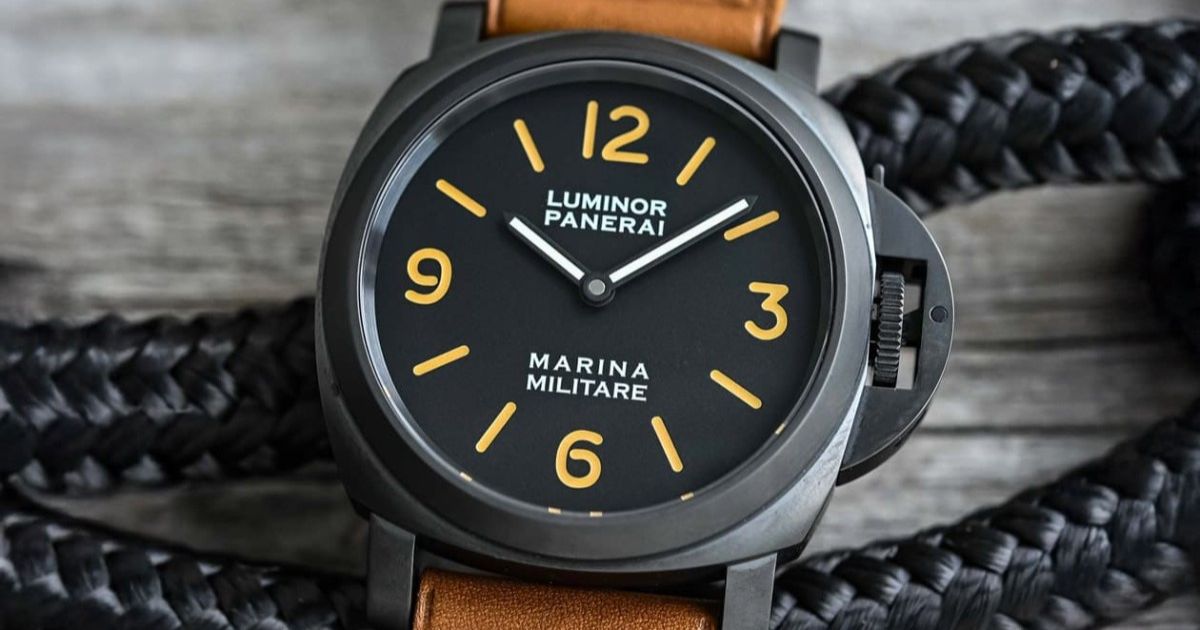
If you’ve spent any time in the world of luxury watches, you’ve felt the presence of Panerai. It’s unmistakable: those bold, cushion-shaped cases, those minimalist sandwich dials glowing with lume, and that overwhelming sense of instrument-like purpose. But unlike many watchmakers whose stories begin in the salons of Geneva or the workshops of the Vallée de Joux, Panerai’s origin is one of sheer, brutal utility. Its journey from the wrists of secretive naval commandos to the zenith of luxury collectibility is a tale of survival, serendipity, and singular design.
Born in the Depths – The Secret Supplier
Our story starts not in a glittering boutique, but in the murky, hazardous waters of the early 20th century. In 1860, Giovanni Panerai founded a watchmaker’s shop in Florence, but it was his grandson, Guido, who steered the family business toward a pivotal partnership: supplying the Royal Italian Navy. Panerai became an official supplier in 1916, focusing on high-precision optical and mechanical instruments.
The navy’s most elite unit, the Gamma men—frogmen tasked with daring underwater sabotage missions—needed a tool that didn’t exist. They required a watch that could be read in the pitch-black conditions of a night dive or in the murky depths. Luminous paint existed, but it was pitifully weak.
Panerai’s genius was not in movement-making, but in radical adaptation and case design. They took robust, manually-wound movements from the highly respected Swiss manufacturer Rolex and encased them in a revolutionary way. The first true Panerai, the Radiomir (patented in 1916 and as a watch in 1936), was born from this necessity.
Its features were purely functional:
- A massive 47mm steel case: Not for fashion, but for legibility and to withstand immense pressure.
- The iconic wire lugs: Welded to the case for ultimate security against the shocks of underwater operations.
- The Radiomir paste: A patented radium-based powder that offered unprecedented luminosity, giving the watch its name.
- A minimalist, high-contrast dial: Large Arabic numerals and bold, syringe hands. This was the birth of the “sandwich dial,” where lume was applied to a lower plate, covered by a top dial with cut-outs, ensuring even, long-lasting glow.
This was a secret weapon, literally. Civilians knew nothing of these watches. They were tools for commandos, bearing no brand name on the dial to maintain secrecy. For decades, Panerai existed in the shadows of military procurement.
The Long Sleep and The Sylvester Stallone Catalyst
After WWII, Panerai’s military work dwindled. The company reverted mainly to instrument-making. The watch designs evolved slightly—the iconic Luminor case with its trademark crown-protecting bridge was introduced in the 1950s, securing the crown for deeper dives—but production was minuscule. By the 1970s and 80s, Panerai watches were virtually unknown outside of a tiny circle of military collectors and hardcore horology historians. The brand was, for all intents and purposes, dormant.
Then, in a twist of fate worthy of Hollywood, Hollywood itself intervened. While filming Daylight in Rome in 1995, Sylvester Stallone wandered into the Panerai boutique (which then existed primarily as a historical oddity). He was captivated by the bold, unique design and purchased several pieces. He later had Panerai create a special limited edition, the Slytech, for his film Daylight. This single act of celebrity endorsement ignited a fire. The watch world, always hungry for something with a story and a distinctive look, suddenly woke up to Panerai’s monumental presence.
The Italian conglomerate Richemont saw the potential and acquired the brand in 1997. The strategy was masterful: they would honor the past with almost fanatical devotion while carefully building a modern luxury empire.
The Modern Icon – Mastering the Code
Panerai’s renaissance is a masterclass in niche marketing and design consistency. They understood that their power lay in their radical DNA. Rather than chasing slim dress watches or complicated minute repeaters, they doubled down on their identity.
- The Power of the Base: The core collections—Luminor and Luminor Due (a slimmer, elegant evolution), and Radiomir—stay incredibly true to the 1930s-50s designs. A Panerai is instantly recognizable from across a room. This design language became their religion.
- The “Sandwich Dial” & Case Shape: These are non-negotiable trademarks. The dial’s depth and lume are a nightly spectacle for owners. The cushion case, whether with wire lugs or the crown guard, is a shape owned by Panerai in the watch world.
- In-House Evolution: While early modern Panerais used modified ETA or Valjoux movements, a key step in their luxury ascent was developing their own Manufacture movements in Neuchâtel. Calibres like the P.9000 and P.4000 families, with their long power reserves and meticulous finishing, silenced critics and cemented high-horology credentials.
- The Materials Laboratory: Panerai leaned into its instrumental roots by pioneering exotic, tech-forward materials. They were early adopters of titanium, carbotech (carbon fiber composite), BMG-Tech (bulk metallic glass), and even EcoPangaea titanium from recycled metals. This appeals to the modern luxury consumer who values innovation and durability.
- The Collector’s Culture: Panerai mastered the concept of limited editions and the “Famiglia Panerai” community. Special editions referencing historical models (like the Egiziano or Mare Nostrum) or partnerships create fervent collector demand.
A Vocabulary for the Learner:
- Luminor: Refers to the post-radium, tritium-based luminous material and the case with the iconic crown guard bridge.
- Crown Guard: The patented lever-activated bridge that locks the crown against the case, ensuring water resistance.
- Sandwich Dial: A two-layer dial construction for superior luminosity.
- OP Logo: The “Officine Panerai” script on modern dials.
- Fiddy: Collector nickname for the ref. 6152/1, a legendary 1950s model.
- Destro: A watch designed for the right wrist, with the crown guard on the left side of the case.
Conclusion: More Than a Watch, a Statement
Today, Panerai occupies a unique throne. It is not a watch for the faint-hearted. Wearing a Panerai is a statement. It says you value history, robust engineering, and a design that refuses to blend in. It connects the wearer to a narrative of human daring—of frogmen navigating hostile waters under cover of night.
From a secret military tool to a celebrity-discovered cult object to a respected luxury powerhouse, Panerai’s journey is a testament to the power of a singular idea. They proved that by staying relentlessly true to a DNA born from extreme necessity, you can create not just a timepiece, but an icon. It is a reminder that in a world of subtlety, there is profound and lasting power in boldness.
About the author : Junior Darryl

Related Posts