Automatic Watches 101: A Beginner’s Guide
Welcome, watch lovers, to a topic that lies at the very heart of horological passion: the automatic mechanical watch. In a world dominated by quartz accuracy and smartwatch connectivity, the automatic watch stands as a testament to human ingenuity, artistry, and romance. It’s a tiny, wearable engine that breathes with your movement, a piece of history on your wrist.
If you’re new to this world, the terminology and mechanics can seem daunting. But fear not! This guide is your friendly introduction to the mesmerizing universe of self-winding timepieces.
The Heartbeat: What Is an Automatic Watch?
At its core, an automatic watch is a mechanical watch that winds itself. Let’s break that down.
A mechanical watch is a masterpiece of micro-engineering. It tells time without a battery or a quartz crystal. Instead, it relies on an intricate system of springs, gears, and levers. The power source is a tightly wound spring, known as the mainspring. As this spring slowly unwinds, it releases energy that is transmitted through the gear train to the balance wheel—the heart that beats back and forth at a constant rate (often 28,800 times per hour!), regulating the release of energy to the hands.
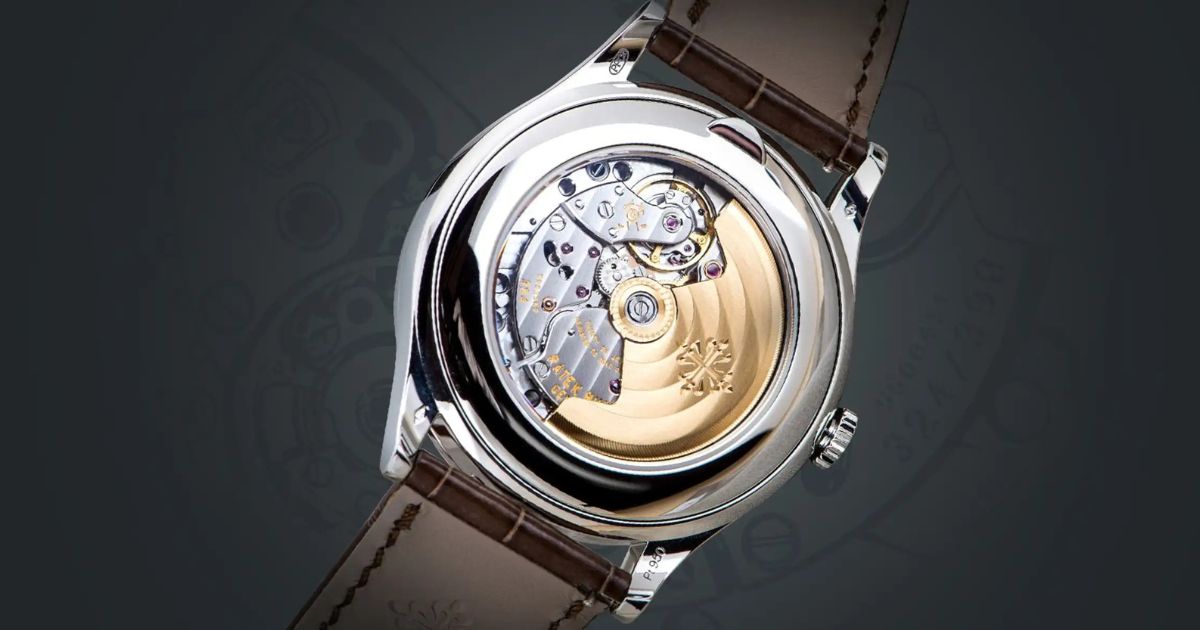
An automatic (or self-winding) watch takes this a step further. It features a ingenious addition: a semi-circular metal weight, called a rotor, that is connected to the movement. This rotor pivots freely 360 degrees. With the natural motion of your wrist throughout the day, the rotor spins, transferring that kinetic energy to wind the mainspring automatically. It’s a perpetual motion machine for your life.
The Magic Inside: Key Components to Know
To truly appreciate an automatic watch, it helps to understand its key components:
- The Rotor: The heart of the self-winding mechanism. It can be a simple, mass-produced piece or a beautifully skeletonized and engraved component in high-end watches. Some rotors wind in one direction, while modern movements often wind bidirectionally for efficiency.
- The Mainspring: The power reservoir. When fully wound, it stores the energy that will power the watch, typically for 38 to 48 hours. This is known as the power reserve.
- The Balance Wheel: The timekeeper. This tiny wheel oscillates back and forth at a highly precise frequency. Its steady “tick-tock” is the literal heartbeat of your watch.
- The Escapement: This device locks and unlocks the gear train, allowing the power from the mainspring to be released in tiny, measured increments to the balance wheel. It’s the “regulator” of the entire system.
- The Movement (or Calibre): This is the complete internal mechanism of the watch. Movements can be mass-produced by specialized manufacturers like ETA or Sellita (known as ébauche movements) or designed, manufactured, and decorated entirely in-house by prestigious brands like Patek Philippe, Audemars Piguet, or Rolex.
The Winding Mystery: Power Reserve and “Hacking”
Since an automatic watch runs on stored energy, it will stop if it’s not worn and the power reserve is depleted. This is perfectly normal! To get it going again, you simply need to wind it.
- Manual Winding: Most automatic watches can also be wound manually by turning the crown. About 20-30 turns is usually sufficient for a full wind. It’s a wonderful, tactile ritual that connects you to your timepiece.
- Power Reserve: If you take your watch off for the weekend, it will likely stop by Monday morning. If you have a watch with an extended power reserve (e.g., 70 or 80 hours), you can take it off on Friday evening and it will still be running when you put it back on Monday. Some watches even feature a handy power reserve indicator on the dial.
- Hacking Seconds: Many modern automatic movements feature a “hacking” function. When you pull the crown out to set the time, the seconds hand stops. This allows you to synchronize your watch with a reference time down to the exact second.
Living with an Automatic: Dos and Don’ts
Your automatic watch is a precision instrument, but it’s also designed for daily life.
- Do Wear It Regularly: The best way to keep your automatic watch running is to wear it. Your daily activities provide more than enough motion to keep it wound.
- Don’t Shake It Vigorously: While designed for motion, violently shaking a watch is not good for the movement. Gentle, natural movement is all it needs.
- Do Consider a Watch Winder: If you have a collection of automatic watches and don’t wear one regularly, a watch winder is a great accessory. It gently rotates the watch, mimicking the motion of the wrist to keep it wound and ready to wear.
- Don’t Set the Date at Night: A crucial tip! Avoid setting the date function between 9 PM and 3 AM. During this time, the date-changing mechanism is beginning to engage internally. Forcing the crown to change the date can damage the delicate gears. If unsure, simply set the time to outside this “danger zone” (e.g., 6:30) before changing the date.
- Do Appreciate Its Character: Your automatic watch will not be as accurate as a quartz watch. A variance of -5/+10 seconds per day is considered excellent for a standard automatic. This slight imperfection is part of its soul; it’s a living, breathing machine.
The Invisible Art: Finishing and Decoration
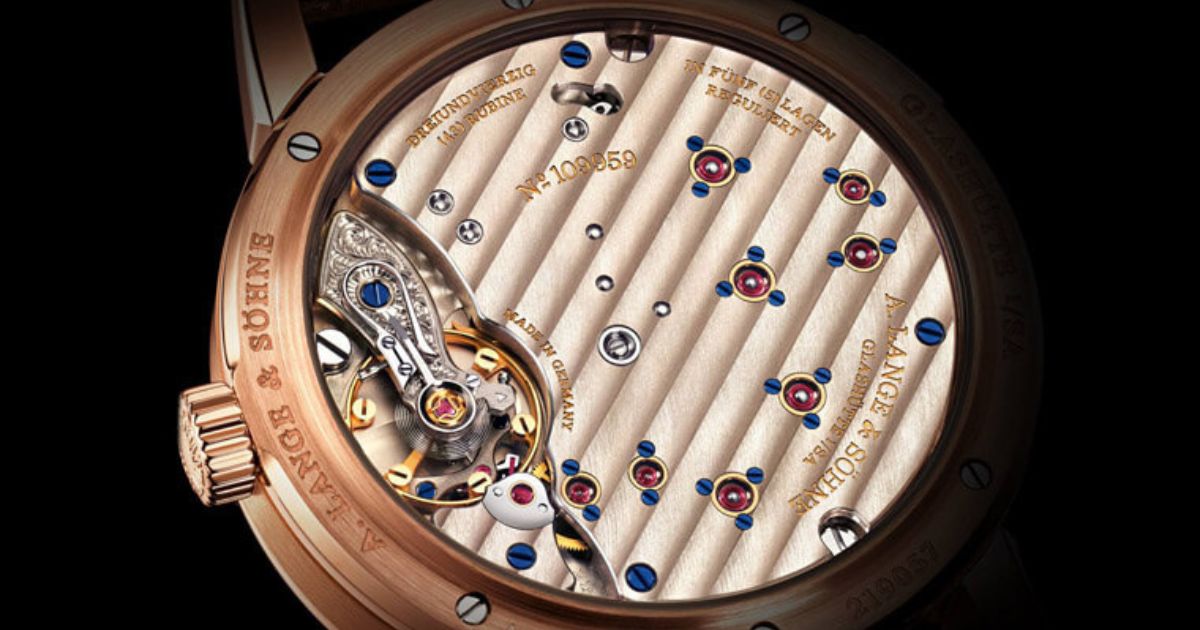
Where automatic watches transcend from mere timekeepers to wearable art is in their finishing. High-end watches feature decorations that serve no mechanical purpose other than to showcase the watchmaker’s skill and passion. Look for terms like:
- Côtes de Genève (Geneva Stripes): Wave-like patterns on the movement plates.
- Perlage: Tiny overlapping circles that create a beautiful, textured background.
- Anglage: The beveling and polishing of the edges of movement bridges to a sharp, gleaming angle.
- Blued Screws: Screws that have been heated to a specific temperature to achieve a vibrant, deep blue hue.
Why Choose an Automatic?
In the end, an automatic watch is not chosen for its utter precision, but for its soul. It connects you to a centuries-old tradition of craftsmanship. It’s a piece of engineering that lives on your wrist, powered by your life. Every tick is a reminder of the beautiful, intricate world of mechanics that we so often overlook.
It’s not just about telling time; it’s about carrying a story.
Welcome to the journey. Your first, or next, automatic watch is waiting to become a part of yours.
About the author : Junior Darryl

Related Posts